
What Every Christian Coach Gets Wrong About AI (And What the Bible Says)
TL;DR: Most Christian coaches are either afraid of AI, indifferent to it, or embracing it as a kingdom opportunity — and only one of those positions aligns with biblical wisdom. AI is already reshaping how every business communicates, operates, and grows. Ignoring it does not protect your faith; it simply leaves you behind. This article draws on real data and scriptural examples to help Christian coaches make an informed, Spirit-led decision about integrating AI into their practice.
Is AI Just Another Big-Tech Trend Christian Coaches Can Safely Ignore?
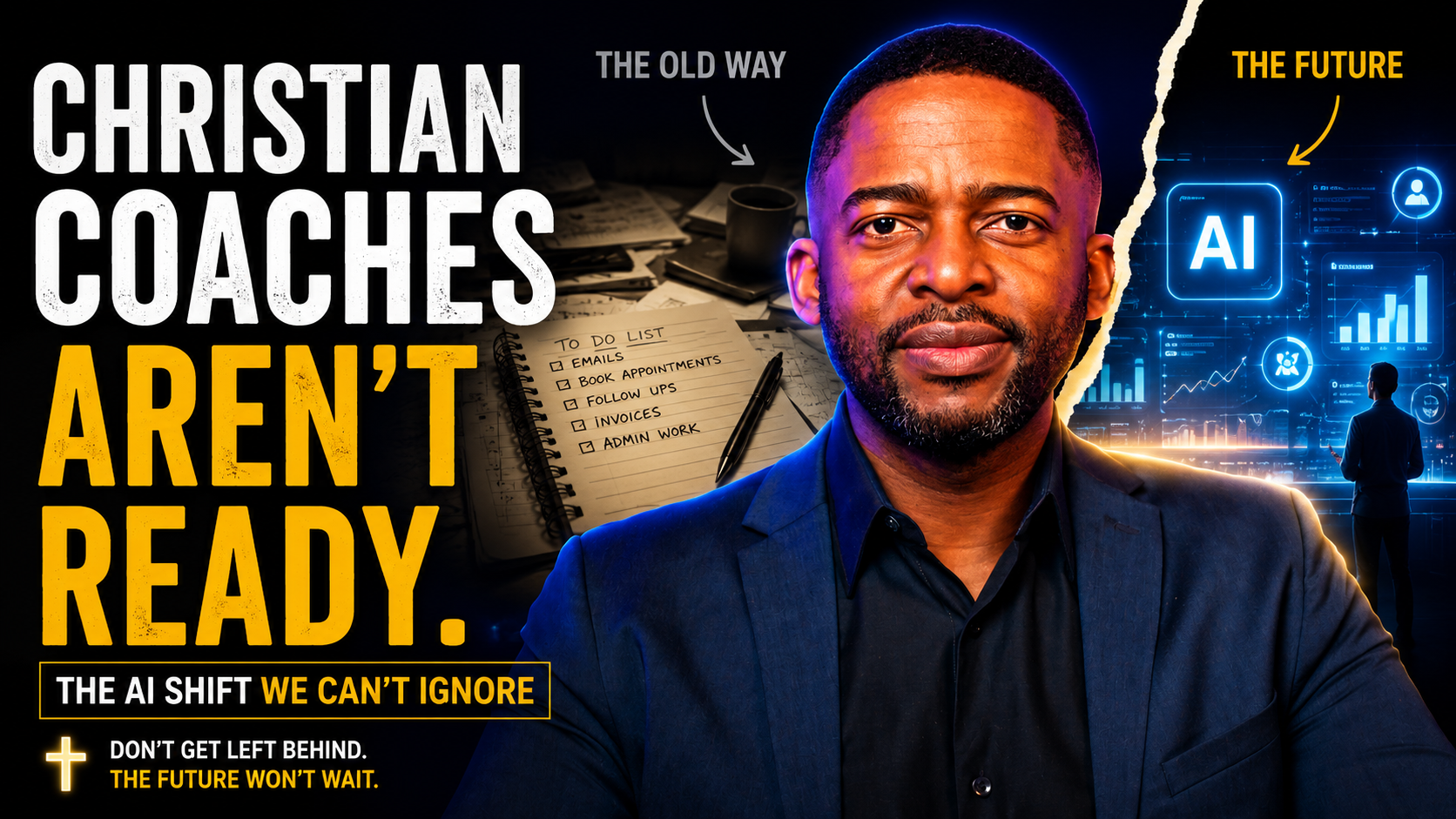
No — and treating it that way is the most costly mistake a Christian coach can make. AI is not a passing fad reserved for Silicon Valley. It is already reshaping how people live, communicate, and do business. Tools, methodologies, and systems that worked even ten years ago are now obsolete. Just as a dentist's office booking appointments with pen and paper in a notebook feels jarringly out of step, coaches who cling to outdated formats risk the same irrelevance — not because they lack faith, but because they lack foresight. The coaching industry sits at roughly twenty-two to twenty-five billion dollars globally, and the global AI market is projected to reach 1.8 trillion dollars by 2030. Staying on the fence is not a neutral, safe, or conservative choice. It is a choice to fall behind.
Should Christians Use AI? What Does the Bible Actually Say?
The Bible does not specifically command coaches to use or avoid AI, but it does provide guardrails and wisdom principles that apply directly to this decision. Proverbs 27 describes a prudent person as one who foresees danger and takes precautions — the opposite of burying your head in the sand. The Apostle Paul taught that everything should be tested, which means approaching AI with discernment rather than blanket rejection or uncritical acceptance. Every technology carries benefits and risks, and wisdom involves honestly weighing whether the benefits outweigh the risks for your specific calling and context.
Scripture also affirms that all good and perfect gifts come from above. The people developing AI technology received their intelligence and creativity from God, whether they acknowledge that or not. That framing does not eliminate the ethical questions — it simply means the tool itself is not inherently evil. The ethics lie in how it is used.
How Has God Used Technology Throughout Biblical History?
God has always worked through the best available technology of each era. When Solomon built the temple, he used the most innovative methods and materials available to him. When Moses constructed the tabernacle, God directed him to gather the most skilled workers who understood current craftsmanship. In Exodus 31, God specifically called Bezalel and filled him with divine skill, intelligence, knowledge, and all kinds of craftsman's work — a direct example of God empowering people to use advanced techniques for His purposes.
The printing press offers a striking parallel. When the Gutenberg Bible was produced in 1455, it was a disruptive new technology. Within forty-five years, over twenty million books had been printed in Europe, with forty-five percent of them being religious texts. Bible distribution increased dramatically in the first century after the printing press was introduced. That technology did not dilute the gospel — it accelerated it. AI is described as no different in its potential to expand reach and impact for those willing to use it wisely.
What Are the Three Mindsets Christian Coaches Have About AI?
Christian coaches and faith-based leaders tend to fall into one of three distinct camps when it comes to AI:
- Fearful (34%): These coaches view AI as primarily a threat to their faith and values. They refuse to engage with it at all, believing it to be inherently harmful or evil. While this concern is understandable, it does not account for the reality that virtually every major company — including the platforms and services these coaches already use — has integrated some form of AI.
- Naive or Neutral (28%): These coaches are neither strongly for nor against AI. They use it casually if it is convenient but have no intentional strategy. This posture may feel balanced, but it leaves significant opportunity on the table.
- Wise and Opportunistic (38%): These coaches view AI as an opportunity to advance their coaching business, serve clients more effectively, and extend their kingdom impact. This group is described as taking the approach that best reflects biblical prudence.
For context, 86% of CEOs in the secular world already consider AI mainstream in their operations. Only 38% of Christian leaders currently feel equipped to make AI-related decisions. That gap represents both a warning and an invitation.
Why Do Christian Coaches Spend So Much Time on the Wrong Work?
Coaches spend approximately 78% of their time on administrative and technical tasks, using tools that are outdated and draining. That leaves remarkably little time for the actual relational, transformational work that coaching is built on. AI can redistribute that burden significantly. Christian coaches who embrace AI tools report 40% higher client satisfaction and 60% more time available for relationship building. Faith-based businesses using automation and AI see a 35% higher profit margin, which in turn enables 58% more charitable giving. More impact, more generosity, and more time for people — not less.
Does Using AI Compromise a Christian Coach's Spiritual Integrity?
The concern is valid, but the conclusion that AI must be avoided does not follow. The stewardship principle found throughout Scripture calls believers to use the tools and gifts they have been given to multiply their impact. AI does not replace the Bible, the Word of God, or the spiritual dimension of coaching — it brings a level of operational clarity and efficiency that frees coaches to focus on what only a Spirit-led human can provide. In fact, one distinctive advantage Christian coaches have over their secular counterparts is the integration of spirituality into their coaching practice. Most secular platforms avoid that integration entirely. A biblically grounded coach using AI wisely does not become less spiritual; they become more available for the work that matters most.
What Is the Risk of Waiting Another Year to Engage With AI?
Most coaches are not thinking strategically about where their business needs to be even one year from now, let alone five. Meanwhile, companies that adopt AI early see a five to fifteen percent increase in revenue compared to late adopters. Churches and organizations that engage with technology report 40% higher engagement rates among members and clients under forty years old, and Christian businesses that embrace digital transformation are two and a half times more likely to report growth in their mission impact. Additionally, 78% of young Christians say they expect their faith leaders to thoughtfully engage with emerging technologies — and that expectation applies directly to coaches. Clients are already looking for leaders who understand the tools that can help solve their problems.
You Do Not Have to Navigate This Alone
Not every Christian coach comes from a technology background, and that is completely normal. The leaders whose organizations advance are often not the most technically skilled people in the room — they are the ones who gather the right creative and technical people around them. If technology is not your strength, the answer is not to avoid it; it is to connect with people and platforms that can guide you. The mandate in Genesis 1:28 to have dominion and subdue the earth is not passive. In the context of AI today, it is an invitation to lead your industry, serve your community, and expand your mission — not by mastering every tool, but by stewarding the right ones with wisdom and intention.
Take the next step in your Kingdom coaching journey
Get practical, faith-driven coaching insights delivered straight to your inbox. No spam, no fluff — just Kingdom strategy that works.